
IHalf a second late
If rooms have ever felt like they were running a rulebook nobody printed, this is for you. If you have left a conversation knowing it died and not knowing when. If you have said the right thing in the right words and watched it land wrong, and then watched someone else say something empty and watched it land perfectly. If you have ever been told you were cold, or intense, or hard to read, by people who could not tell you what reading is.
You are not weird. You are half a second late.
Humans are herd creatures. Under every conversation runs a silent protocol, and most people execute it the way they walk: without thought and without error. They cannot explain it because they never learned it. It was installed before they could talk. A few of us did not get the install, or got a version that runs half a beat slow, and the room registers the lag even when nobody can name it.
Here is the good news, and it is the whole reason this page exists. The protocol is small. It has three signals. Once you can see them, you can run them on purpose, and running them on purpose works. It is slower than instinct and it costs more, and we will be honest about the cost. But it can be learned, it can be practised, and unlike instinct it can be taught, which is why the people who learned it late are the only ones who can explain it. This manual has been explained out loud, to many people, over many years. It helps. That is the claim, and nothing bigger.
The framework is called purr, pop, flash. It was written up twice before, as a protocol spec and as a tiny field guide. This version is for us: the ones who need it as a tool rather than a curiosity.
IIThe three signals
Every interaction, from an elevator nod to a breakup, decomposes into three primitives, endlessly recombined. Learn the three and you will see them everywhere, and you will never unsee them.
Purr is the channel opener. It is the carrier wave. A purr asks are we synced? is this connection live? and the words it uses do not matter at all. Hi, how’s it going. Long day, huh. Cold out. Nobody is requesting a status report. They are matching energy and checking that the line is up. Small talk is almost entirely purr, which is why it feels pointless to anyone who listens to the words. The words are not the point. The tone is the point. If you have ever felt comfortable in a group without understanding a single thing they were saying, you were being purred at, and you were purring back without knowing.

Pop is the transmission. It is the actual content: the story, the take, the argument, the fact, the pitch. Popping is being the centre of attention for the length of the pop. It is the only one of the three signals where accuracy sometimes matters, and the one that most of us think conversation is made of. It is not. A pop with no channel underneath it is a radio playing in an empty room.

Flash is the receipt. It is the social acknowledgment: a nod, an mm-hm, a laugh, a no way, a double-tap, eye contact at the right moment. A flash says message received, channel still good, keep going. The content of a flash is irrelevant. The signal is the message. And the absence of a flash is information: when the acknowledgments stop, the channel is dying, even if nobody has said so, even if everyone is still talking.

Put the three together and you have the whole stack. Purr opens the channel. Pop sends. Flash keeps the channel open. Most people think conversation is popping. Without purr and flash, popping is just transmitting into the void.
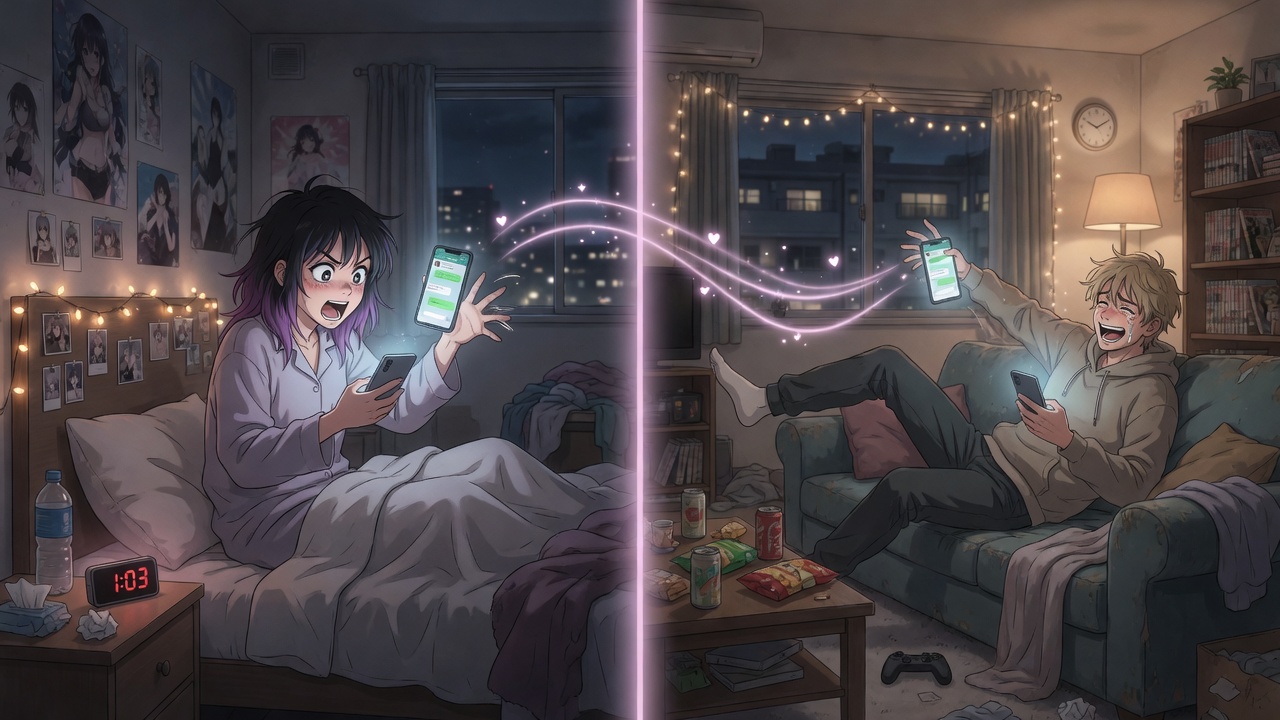
A quick way to feel the difference. Think of a friend telling you about seeing their ex in a supermarket. DUDE is a purr: high energy, demanding sync. What. WHAT. is a purr and a flash at once: matching the energy, signalling ready to receive. He was holding a wheel of brie like a championship belt is a pop. THE AUDACITY OF THE BRIE is a flash with a purr riding on it. Nobody in that exchange is trying to convey information about cheese. They are testing whether the friendship channel is still open. It is.
IIITag the packet

The fastest way to learn the three signals is to classify real ones until it becomes automatic. Below are a dozen things people say or do. Tag each one. Some fire more than one signal at once, and the answers say so. If you get them wrong, that is the point: wrong answers here are cheaper than wrong answers at dinner.
Tag the packet
Twelve things people say. Which signal is it?IVWhat each signal costs
The three signals are not free, and they do not cost the same. This matters more for us than for anyone, because we are paying consciously for things other people get on expense account.
Every signal draws on the same reserve, and the plain word for it is regulation: the capacity to hold your own state steady while something else is happening. Regulation is not calm. You can be regulated and furious. Regulation means the anger reports to you instead of publishing on its own.
A purr is cheap. Ambient warmth costs a trickle, which is why small talk survives long days.
A pop is free at the bottom of the tank, and that should worry you. Watch anyone truly depleted: the purring stops, the flashing stops, and what is left is transmission. The grievance, the monologue, the take. It feels like connecting. It is discharge.
A flash is the expensive one, and the reason is structural. To acknowledge what someone else sent, you have to hold your own transmission for a beat and let theirs land. That beat costs presence, every time, and there is no discount on it. Which gives you the single most useful sentence in this manual, to be applied first to yourself and then to everyone else.
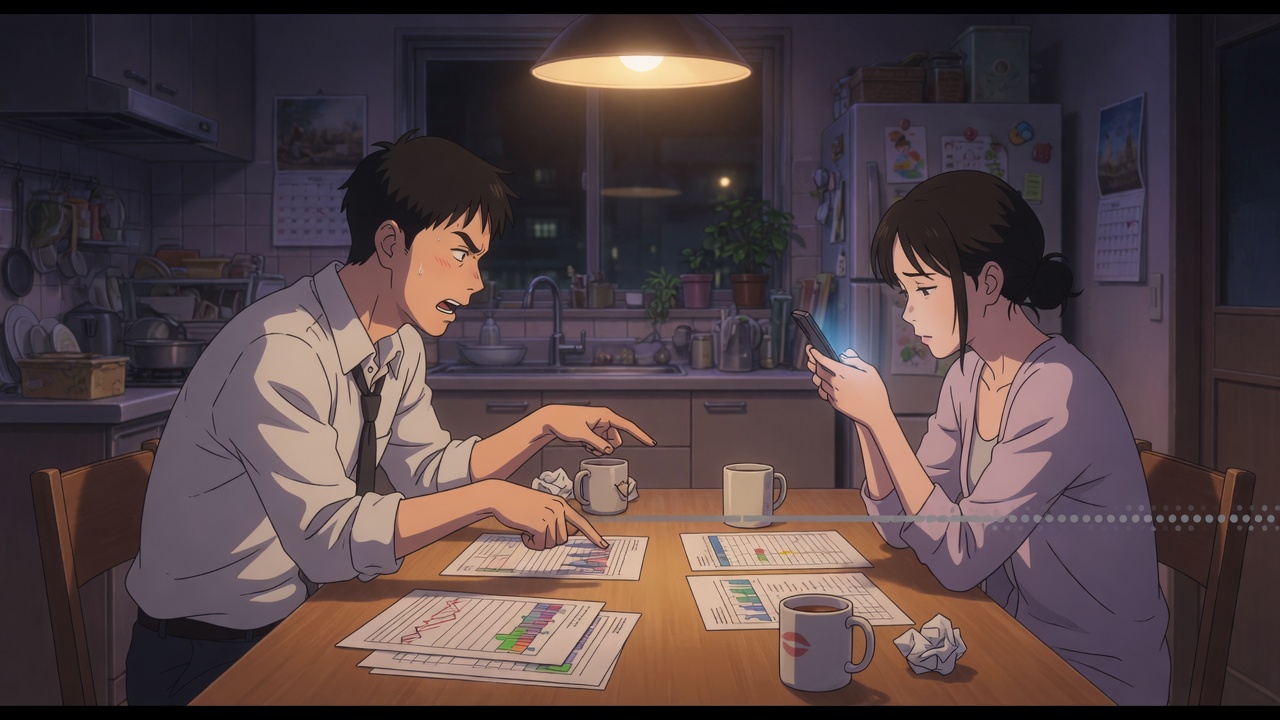
Try it. The simulator below puts you in the listener’s seat with a battery. Every acknowledgment costs. Silence is free. So is talking over them. Play it rested, play it after a long day, and play it on fumes, and notice how a kind person at twenty percent looks exactly like someone who does not care.
The channel: you are the listener
Every acknowledgment costs regulation. Silence is free. So is talking over them.A toy, not a model. Nine beats, invented prices. The shape is real: receipt costs, silence escalates, a bare nod is not enough once someone is saying the vulnerable part, and at twenty percent the kindest person in the room looks exactly like someone who does not care. Two moves are free that most of us never use: naming the pause, and the honest exit.
VReading a room in thirty seconds

Every group has an invisible status structure, and the protocol makes it visible. You do not need to speak the language. You do not need to hear the words. Watch for thirty seconds and ask four questions.
- Who sets the purr? The person establishing the energy level for the group holds the power. Everyone else is syncing to them. That is your anchor: match them, or pivot off them deliberately.
- Whose pops get flashed? High-status pops get acknowledged. Low-status pops get dropped or talked over. Count the ratio and you have the hierarchy without a word being said.
- Who can pop at will? Some people take the floor whenever they want. Others wait for permission. That is not personality. That is rank.
- Who flashes whom? Lower-status people flash more toward higher-status people. The asymmetry is the shape of the room.

Then add the fifth question, the one that pays: who is being systematically under-flashed? Somebody at that table is transmitting into the void, the way you have. If you flash them, you have made an ally for the price of a nod, and you have done something that nobody else in the room noticed needed doing.
This works in rooms where you do not speak the language, because the protocol never depended on the words. And it works in rooms where you do speak the language but the real conversation is happening underneath: the meeting where everyone says we’re aligned and the purring is off, where somebody pops and gets nothing back. That silence is data. You are allowed to read it.
VIWords that work
You do not need to be good at words to run the protocol, because the words were never the payload. You need a small set of phrases that reliably send the right signal, and you need permission to use them even when they feel scripted. They feel scripted to you. They do not sound scripted to anyone else. Everyone’s purrs are scripts; theirs are just older.
To open or reopen a channel (purr). Softer, slower, lower stakes than whatever came before.
- Hey, how are you holding up?
- That’s a lot to deal with.
- Long day, huh.
- This is hard.
- I want to understand where you’re coming from.
To acknowledge (flash). You are not agreeing. You are confirming receipt.
- Mm-hm.
- Yeah, that part’s real.
- I hear you.
- You’re right that X matters. This one is the radical flash, the move that restarts a dying channel: find anything in the other person’s position you can genuinely acknowledge and acknowledge it, out loud, before you say anything else.

To pop without losing the room.
- Building on what [name] said… attaches your transmission to one that is already being flashed.
- Pop smaller. Break the big thing into chunks people can acknowledge without committing to anything.
- Pop to one person. If the group will not give you the floor, have the conversation with one receptive person. Others tune in.
To buy time, which we need more than most. The pause while your reply compiles reads, from outside, as absence, coldness, or error. Name it and it becomes a purr.
- Give me a second, I’m thinking about that.
- Hang on, I want to get this right.
To leave without burning anything.
- Let’s come back to this. Preserves the channel for repair later. Storming off, or going silent and staying silent, burns the channel harder than any exit line.

VIIThe traps that catch us
Instinct-protected people fall into these too, but they fall in less often and climb out faster. We should know them by name.
The retransmission flood. Your pops stop getting flashed. The channel is going dark. And the thing your whole body wants to do is transmit harder: louder, longer, with more supporting evidence, as if the problem were that they had not received enough content. More content into a dead channel is not a strategy. It is the single most common way we lose rooms. The move is the opposite of the instinct: stop popping. Downshift to a purr. Flash them. If nothing reopens, exit clean.

The no-ACK alarm. A reply does not come on schedule, and something low and genuine goes off. You check. You re-read what you sent. You draft a follow-up. The alarm is real, but it is miscalibrated, because most absent flashes have nothing to do with you. The person is depleted, or distracted, or flashes in a style you have not learned to read, or has never flashed anyone. A signal that never varies carries no verdict about you. If someone has never flashed anybody, their not flashing you means nothing.
The compile pause. You need a second to build a reply, and the second is visible. An unfamiliar observer scores it as not listening, not caring, or not understanding. The fix is in the section above: say what the pause is. Then it is a purr, and the second is yours.

The invoice. You will be billed for every half-second of latency, by people who are never billed for theirs. Misunderstanding between two different kinds of mind is mutual, and it is only ever diagnosed in one of them. Knowing this does not make the bill go away. It does make it legible, and it lets you stop reading the bill as a verdict on your worth. You are paying for a thing other people get for free. That is a fact about the pricing, not about you.
Flashing everyone. Once you can see the protocol, there is a temptation to run it at full power all the time: purr every room, flash every pop, never let a channel drop. This is how you make a great first impression and then disappear for three days. Flashes cost. Budget them. Spend them on the people and rooms that matter, run the rest on cheap purrs, and let some channels close. The protocol is a tool for being in the herd on purpose, not an obligation to be in it all the time.
Mistaking the tool for a self. This is not a method for becoming someone who does not need the method. People who learned the protocol late run it consciously for life, and that is fine. Conscious is not fake. The best hosts you will ever meet are running it consciously too; they just started earlier. Use it where it helps you. Drop it where it costs more than it returns. Nobody is grading you on whether the warmth was instinctive.
And the hard one: when someone cannot receive you. Some people run transmit-only. They know the signals they send and nothing else, so when a flash arrives, they file it under the nearest thing they do know, and the nearest thing is a pop: a move, a claim, a bid for position. That sounds really hard comes back as so now I complain too much. You cannot flash your way through that, and you cannot explain your way through it either, because the explanation arrives over the same channel. The only move is to stop submitting your interior for correction, stay warm from outside the exchange, and leave the door unlocked. It is not about you. It was never going to be about you. There is no parser on the other end.
VIIIWhere it gets weird
Three primitives cover most of what happens. A few things look like exceptions and are not.

- Humour and teasing. A well-timed joke is a pop (content), a purr (energy calibration), and a flash request (laughing together is receipt) all at once. Teasing someone you like runs on all three channels. If you find jokes hard to read, this is why: they are the highest-bandwidth signal in the protocol.
- Flirting. Mostly purring with plausible deniability. The content barely matters. What matters is whether the energy escalates and whether the other person matches it. Micro-pops and micro-flashes layer in. It is the protocol running hot, which is also why it is so easy to misread.
- Roasting your friends. Insults between close friends look like aggression and function as purring. The willingness to take the hit and dish it back is a flash that says we are close enough for this. Reading it as hostility is one of the most common cross-cultural errors, and we make it more than most.
- Jamming. Brainstorming at its best is rapid pop-flash-pop-flash until the line between your idea and mine dissolves. Zoom out and the whole group is one transmitter.
- Silence. Comfortable silence between close people is a sustained purr. Uncomfortable silence is a channel dying. Same behaviour, opposite protocol state. If you cannot tell which one you are in, check the last flash: if it came recently and warmly, the silence is a purr.

The model is a compression, not a simulation. When something feels too complex for it, you are usually looking at several primitives firing at once, not at a fourth primitive.
IXWhy this works when instinct doesn’t
People who run the protocol by instinct cannot teach it. Ask the warmest person you know how they do it and they will say they are just talking. That is not modesty. Their knowledge is tacit; it was never in words and it cannot be put there on request.
Ours is explicit. We learned it by watching, modelling, naming, rehearsing, and correcting, and explicit knowledge is slower and dearer than tacit knowledge, and it has one property that no amount of instinct can buy. It can be written down. It can be handed to the next person who is half a second late. It can be used to show the instinctive people what they have been doing the whole time, which, in the right room, is a gift they did not know they wanted.
So the overhead you pay is not a defect. It is the cost of the only version of this skill that is transferable. Expect it to be heavy at first. Expect the room to feel like a spreadsheet for a while. Then, with practice, expect the recognition to drop out of words and become perceptual: you will see a channel die the way other people see a traffic light change, and you will know what to do, and you will have a name for it when they ask.
Most people cannot teach what they do instinctively. This is the spec.
Art is a beautiful thing. Master it and be gentle in the world.